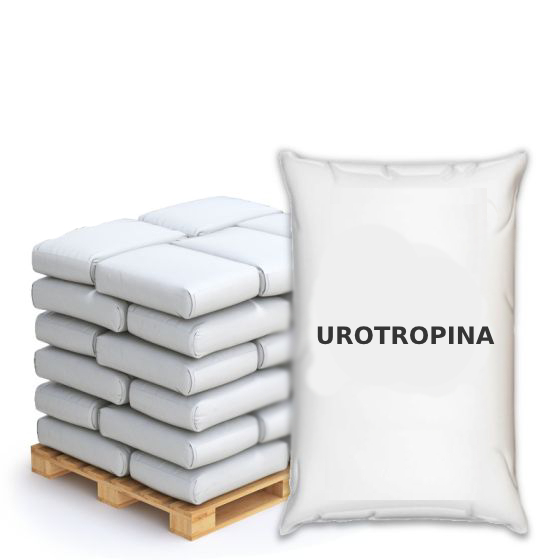
Identity
One compound, a dozen names.
The material you receive from us is hexamethylenetetramine. Depending on the
market, the decade and the industry, the same white powder is ordered as urotropine, hexamine,
methenamine, formin, aminoform or simply HMTA. Central European purchase orders
typically say urotropina; English-language technical standards say hexamine.
Structurally it is a cage of four nitrogen atoms joined by six methylene bridges — a
symmetrical, tension-free arrangement that explains its stability as a solid and its
willingness to release formaldehyde once heated or acidified. It is manufactured by reacting
formaldehyde with ammonia in aqueous solution, then crystallising and drying the product.
What that means in practice
Hexamine is the safe, storable way to keep formaldehyde on site. It is a solid at room
temperature, it does not off-gas in sealed packaging, and it delivers the reactive species only
where your process asks for it.